
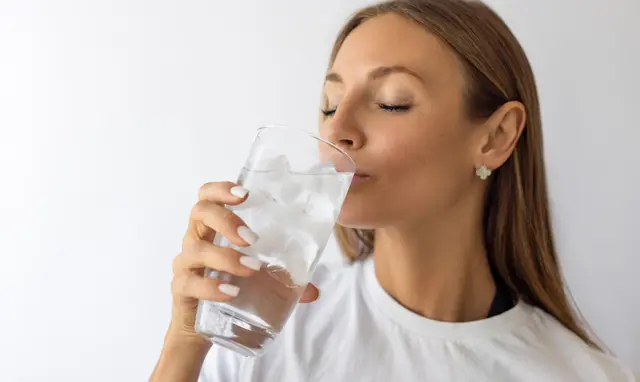
Key Points
- Ice water burns a few calories, but the effect is too small to lead to weight loss
- Losing weight is hard because your body actively fights back by increasing hunger and burning fewer calories
- A registered dietitian can help identify weight loss challenges, from diet and nutritional gaps to hormonal imbalances and more
When you've tried different ways to lose weight without lasting success, the frustration can feel overwhelming.
In such moments, weight loss hacks that promise fast and easy results can be quite appealing.
That’s why the ice water hack for weight loss gained attention.
The claim is straightforward: drinking ice water is said to boost metabolism and burn extra calories. Because it sounds tied to how the body works, it can feel more believable than many other weight-loss ideas.
The real question is whether it actually makes a meaningful difference.
Does the ice water weight loss hack work?
It does not meaningfully change how many calories you burn over the course of a day, and it does not lead to lasting weight loss.
Drinking ice water burns very few extra calories, and the effect doesn’t last.
That said, some people notice changes in appetite when they drink more water. Drinking water can sometimes help with feeling full or staying consistent with eating, depending on the person.
But that isn’t specific to ice water; it's about drinking water in general.
Why was the ice water weight loss hack popular?
1. It works (kind of), but the effect is small
The ice water idea is based on something real—your body uses a small amount of energy to warm cold water, so you do burn a few calories.
What gets exaggerated online is the payoff. Only a few extra calories are used, and the effect doesn’t last.
2. It’s easy, costs nothing, and has no downside
There’s nothing to buy, no setup, and no real downside to our health. Drinking cold water is easy and doesn’t require anything beyond a refrigerator.
3. It feels like something is happening
The sensation of cold can make some people feel like the ice water is “working”. That physical feedback may reinforce the belief that it’s doing something useful, even when the effect is limited.
4. The “easy weight loss” claim is attractive
The ice water idea fits into a familiar pattern of weight loss claims based on a nugget of truth.
For example, in the 1990s and early 2000s, “negative-calorie foods” were everywhere in diet books and magazines. The idea was that some foods burned more calories to digest than they contained.
It sounded logical at the time.
But in real life, the effect was just too small to make a lasting difference.
In general, simple explanations and bold claims tend to go viral on social media compared to nuanced, research-based content.
Why is weight loss so hard to achieve?
It’s natural to hit a weight loss plateau
Many people eat less, move more, and see results at first. Then weight loss slows or stalls. Hitting a weight loss plateau is common but frustrating.
And for some people, weight may start creeping back over time.
Why does this happen?
The body pushes back
As weight drops, the body often reacts as if fuel is becoming scarce. Hunger signals can get stronger. At the same time, the body may quietly start using fewer calories than expected for its new size.
These shifts help explain why a weight loss plateau can show up even when habits haven’t changed.
This response is protective
Researchers describe this as part of the body’s built-in defense system. The body tends to resist ongoing weight loss more strongly than weight gain.
Small changes usually aren’t enough on their own
This doesn’t mean change is impossible. It helps explain why small tweaks, like switching to ice water, rarely move the needle on their own when it comes to lasting weight loss.
How can a dietitian help with weight loss?
Sustainable weight loss is complex and shaped by diet, energy levels, stress, sleep, medications, certain nutritional deficiencies, underlying hormonal imbalance, genetics, and much more.
A registered dietitian helps identify the specific factors affecting weight loss, such as:
- Identifying unhealthy diet patterns that can be hard to maintain
- Spotting nutritional gaps that affect hunger and fatigue
- Figuring out how to stop food cravings
- Tailoring diet plans to fit real schedules, budgets, and energy levels
- Working through emotional eating triggers and patterns without guilt or shame
Can a dietitian help if you’re on Zepbound or Wegovy (weight loss drugs)?
Newer weight loss medications like Wegovy (semaglutide) and Zepbound (tirzepatide) have changed how we think about losing weight.
Now, more people understand that weight loss has nothing to do with “willpower.” Body chemistry plays a major role.
Weight loss on GLP-1 drugs
In studies, people taking GLP-1 weight loss medications lost an average of 15% of their body weight. Some people lost more than 20%, depending on the drug and dose.
That’s why these medications are in such high demand. But the lower appetite and slower digestion can also make eating harder.
How weight loss drugs affect food intake
The lower appetite and slower digestion caused by weight loss drugs can make it hard to get the right amount of nutrition.
Sometimes, people may skip meals or eat too little because they just don’t feel hungry. Others may avoid food because of side effects like nausea or constipation.
Over the course of the week, that can add up.
If nutrition falls short, food cravings may return towards the end of the week as the medication’s effects start to wear off before the next dose.
A weight loss dietitian can help with:
- Figuring out how to eat when hunger cues are muted
- Getting enough protein and key nutrients while eating less
- Managing side effects that interfere with meals
- Keeping eating patterns steady across the week
- Navigating social pressure around food intake
Final thoughts: Ice water for weight loss
Drinking ice water isn’t harmful, but it isn’t a weight loss strategy on its own.
Your body does burn a small amount of energy warming cold water. That part is real. The effect is just too small to matter in the bigger picture.
Weight loss is shaped by more than habits alone. The body has built-in responses that can make progress feel harder than expected, even when effort is consistent.
Registered dietitians offer nutrition guidance that’s practical, personalized, and designed to work in real life.
Find a weight loss dietitian near you, covered by insurance.
Frequently asked questions (FAQs)
Does drinking ice water burn calories?
Yes, but only a small amount of calories. The body uses energy to warm cold water, but the effect is temporary. On its own, without diet and lifestyle changes, ice water is not enough to lead to weight loss.
Can ice water boost metabolism?
Ice water can briefly increase calorie burn, but the effect doesn’t last. Research shows that cold water doesn’t change metabolism in a meaningful or lasting way.
Is ice water better than room-temperature water for weight loss?
Research on whether drinking water boosts metabolism is controversial, with inconsistent findings across studies. Even cold water shows only minimal, temporary effects that don't meaningfully impact weight loss. Staying hydrated matters more than the temperature of your water.
Do ice baths or cold showers help you lose weight?
Research on cold exposure, like cold showers, shows small, short-term changes in energy use, but it hasn’t been shown to lead to meaningful or lasting weight loss.
What is the best weight loss diet?
The Mediterranean diet is one well-studied option. Research has linked it with weight loss and with heart and metabolic health benefits.
Lose weight the healthy way. Find a weight loss dietitian who accepts your insurance.
The views expressed by authors and contributors of such content are not endorsed or approved by Fay and are intended for informational purposes only. The content is reviewed by Fay only to confirm educational value and audience interest. You are encouraged to discuss any questions that you may have about your health with a healthcare provider.
Sources
Fay Nutrition has strict sourcing guidelines and relies on peer-reviewed studies, academic research institutions, and medical associations. We avoid using tertiary references.
- Water-induced thermogenesis and fat oxidation: a reassessment (December 21, 2015)
https://pmc.ncbi.nlm.nih.gov/articles/PMC4735055/ - Effect of Acute Cold Exposure on Energy Metabolism and Activity of Brown Adipose Tissue in Humans: A Systematic Review and Meta-Analysis (June 28, 2022)
https://www.frontiersin.org/journals/physiology/articles/10.3389/fphys.2022.917084/full - Once-Weekly Semaglutide in Adults with Overweight or Obesity (March 18, 2021)
https://www.nejm.org/doi/full/10.1056/NEJMoa2032183 - Tirzepatide Once Weekly for the Treatment of Obesity (June 04, 2022)
https://www.nejm.org/doi/full/10.1056/NEJMoa2206038